

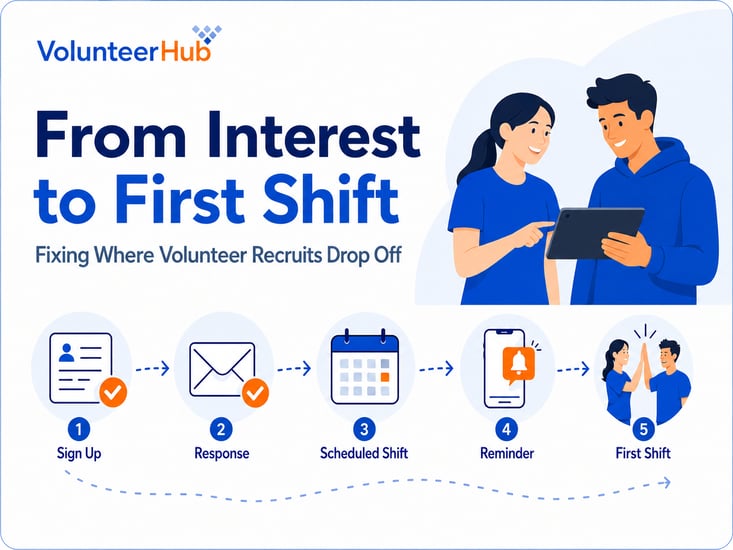
Many volunteer programs have a list of people who have already expressed interest. They filled out a form, registered online, checked a box, or stopped by a table at a volunteer fair. Yet a significant share of those prospective volunteers never complete a first shift.
It is tempting to treat that gap as a recruiting problem and respond by looking for more names. In many cases, however, the issue is not a lack of interest. More than 75 million Americans formally volunteered in a recent year, according to AmeriCorps and the U.S. Census Bureau, and for most programs, the harder challenge is keeping the volunteers they already have. The real issue is usually a breakdown in the process between initial interest and first participation.
The encouraging news is that this stage of the volunteer journey is primarily operational, which means it can be intentionally designed and improved. Prospective volunteers tend to drop off at a few recurring points. Once those points are clear, organizations can introduce simple, repeatable systems to reduce delays, communicate next steps, and guide more interested individuals into active volunteer roles.
It is also important to recognize why these gaps occur. In many organizations, a single coordinator is responsible for recruitment, scheduling, follow-up, communication, and the day-of volunteer experience. When follow-up relies entirely on individual effort, some sign-ups wait too long for a response, and others may not receive one at all. The goal is not to increase workload. The goal is to make the process more consistent and supportive—often by using technology to carry some of the administrative weight.
The Four Gaps Where Volunteer Recruits Drop Off
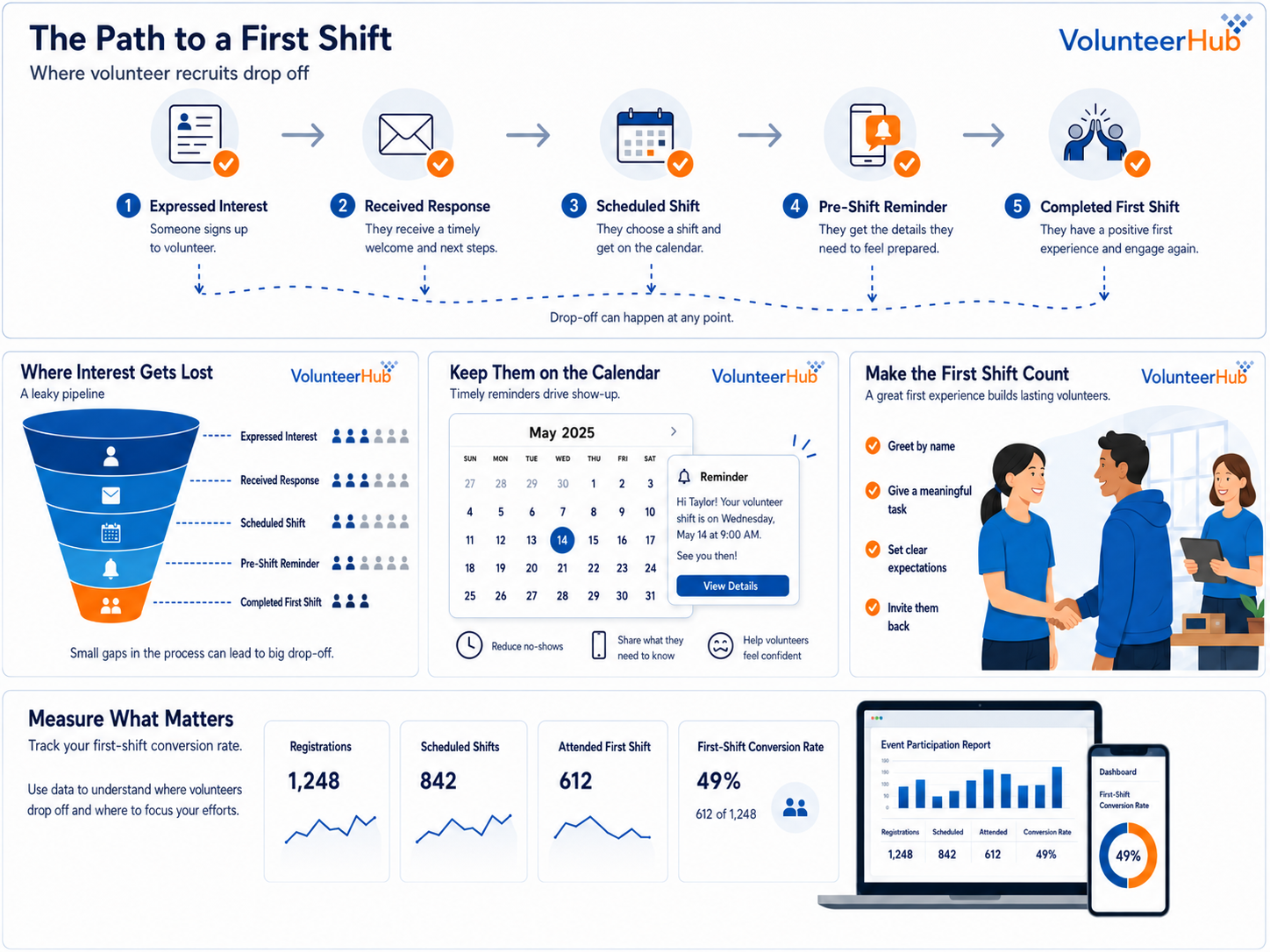
A volunteer's path from "I'm interested" to a completed first shift usually includes four critical handoff points:
- After someone signs up, but before they receive a response.
- After they receive a response, but before a shift is scheduled.
- After a shift is scheduled, but before the day arrives.
- During and immediately after the first shift.
Reviewing each stage can help you identify where prospective volunteers are losing momentum.
Gap 1: From Sign-Up to First Reply
The first response sets the tone for the entire volunteer experience. When someone signs up, their interest is immediate and active. A reply that arrives several days later can feel like a missed connection, and no response at all may signal that the organization is not prepared to welcome them.
A new volunteer should receive a confirmation within minutes. The message can be brief and still be effective. It should acknowledge that their information was received, express appreciation, and outline what will happen next. For example: “Thank you for signing up to volunteer with us. We have your information, and a coordinator will be in touch within one business day with the next step to get you on the schedule.”
Technology can make this initial touchpoint consistent and dependable. VolunteerHub, for instance, sends registration confirmations automatically when someone registers for an event. Organizations can also use Workflows, VolunteerHub’s trigger-based automation, to send a tailored follow-up as soon as a person signs up. An immediate, clear response often creates a stronger first impression than a more polished message that arrives days later.
Gap 2: From Interest to a Scheduled Shift
A confirmation message that ends with "we'll be in touch" often creates a stall. The volunteer has expressed interest, but they do not have a specific next step. At that point, the burden shifts back to the coordinator to follow up manually.
The better approach is to give each prospective volunteer one clear action. Ideally, they should be able to choose a shift immediately after signing up, while their motivation is still high. When volunteers can view available opportunities and self-schedule from any device, the process becomes faster and easier for both the volunteer and the organization.
If your program prefers to route volunteers manually, offer a specific option instead of an open-ended request. For example, "We have a Saturday morning shift on the 14th. Are you available?" is more actionable than "Let us know when you're free."
The key principle is simple: no prospective volunteer should finish the sign-up process without knowing the next step required to get on the schedule. Our guide to online volunteer registration walks through setting up that self-scheduling path.
Gap 3: From Scheduled Shift to Shift Day
Even after a volunteer has scheduled a shift, attendance is not guaranteed. In many cases, the barrier is not a lack of interest or commitment, but uncertainty about what to expect.
First-time volunteers may be unsure about where to park, which entrance to use, what to wear, what to bring, or whom to ask for when they arrive. These unanswered questions can feel significant, especially for someone who is new to your organization and wants to make a positive contribution.
A concise reminder one or two days before the shift can significantly reduce this uncertainty. The message should proactively address practical details: Where should they go? What time should they arrive? What should they bring or wear? Who will be ready to welcome them? A pre-shift text might read: “Hi [Name], we look forward to seeing you tomorrow at 9 a.m. Please park in the south lot, use the Main Street entrance, wear closed-toe shoes, and ask for the volunteer coordinator when you arrive.”
Automated and real-time text messages can be especially effective for these reminders because they reach volunteers close to the moment they need the information. For volunteers who registered weeks earlier, the reminder also reinforces the commitment and helps prevent no-shows. Our post on volunteer texting covers how to use SMS for these pre-shift messages without overdoing it.
Gap 4: The First Shift
The final drop-off point is easy to overlook because the volunteer technically attended. They showed up once, had an unclear or disconnected experience, and never returned.
A first shift should be planned with the same care as the recruitment process. New volunteers should be greeted by name, introduced to the environment, and given a meaningful task quickly. Even a simple task helps them feel useful rather than in the way.
Before they leave, they should also know what comes next. Naming a future opportunity, inviting them back, or helping them schedule another shift can turn a one-time appearance into the beginning of an ongoing volunteer relationship. Tools like the VolunteerHub mobile app help here by keeping a volunteer's upcoming shifts and event details in one place, so a second commitment is easy to find and act on.
Research on volunteer retention consistently points to the importance of social connection. A strong first-shift experience does not require a complex orientation program, but it does require a consistent welcome routine that helps new volunteers feel expected, useful, and included. Our best practices for volunteer orientation and our framework for moving orientation into onboarding go deeper into making that first experience one people want to repeat.
How to Identify Your Program's Drop-Off Points
You do not have to rely on guesswork to understand where prospective volunteers are losing momentum. In many cases, the information you need is already in your records.
Begin by generating a list of individuals who registered or indicated interest during the past few months. Then compare that list with the group of volunteers who completed at least one shift. The gap between these two groups reveals how much interest is being lost before a first shift takes place.
Next, examine where the pattern points you. If a large number of people sign up but never schedule a shift, the primary issue is likely Gap 2. If many volunteers schedule but do not attend, the challenge is probably Gap 3. If new volunteers complete a single shift and do not return, the root cause may be the first-shift experience itself.
In VolunteerHub, Event Participation and Custom Reports can help organizations compare registrations, attendance, and participation trends over time. Tracking this data turns a vague concern into a measurable first-shift conversion rate. Volunteer time also carries real value; the Independent Sector estimate puts it at $36.14 an hour, which is worth remembering when you decide where to focus. As that rate improves, your program gains clearer evidence that the process is working. For a wider set of program numbers worth watching, our roundup of volunteer statistics every nonprofit should know is a useful reference.
Start With the Largest Gap
You do not need to improve every part of the process at once. Focus first on the point where the most prospective volunteers are dropping off.
For many volunteer programs, the largest gaps occur early: the first response is delayed, or the next step is unclear. Both can be addressed with straightforward changes. An immediate confirmation, a clear path to scheduling, and timely pre-shift reminders can turn more interested individuals into scheduled volunteers who arrive prepared and on time. Tools such as automated confirmation emails, self-scheduling, and reminder messages within a volunteer management system can make these touchpoints consistent and reliable.
Every person who has expressed interest represents outreach work your organization has already completed. Strengthening what happens after that initial "yes" is one of the most practical ways to increase participation without expanding recruitment efforts. By investing in a clear, supportive follow-up process—and using technology to keep it running smoothly—you create a more welcoming experience for new volunteers and protect the value of the interest your organization has already generated.